
Here is another report from the summit held in November in Manhattan. It considers areas such as literary estates and music royalties. A fascinating topic.
On November 17 at PwC's New York headquarters, executive moderator Stephen Szypulski convened three CEOs pioneering institutional infrastructure across underutilized verticals: music royalties, literary estates, and thoroughbred racing. The discussion revealed that cultural assets, besides just pure art and collectibles, are evolving from passion investments into a distinct alts category with tangible income streams, experiential value, and portfolio diversification benefits.
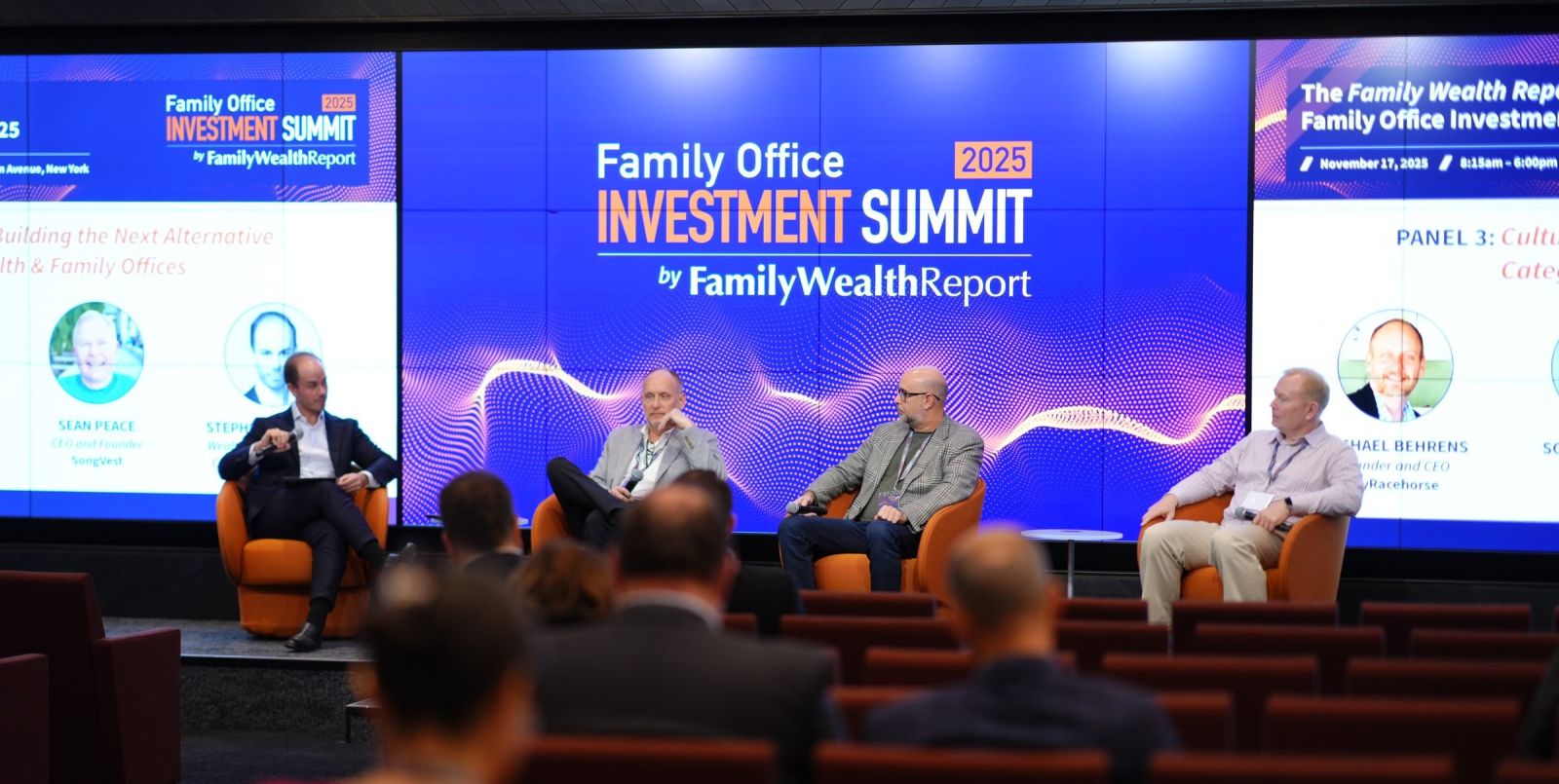
Left to right: Stephen Szypulski, Wealth & Private Capital Consultant ; Michael Behrens, MyRacehorse; Scott Hoffman, ILP Literary, and Sean Peace, SongVest.
Bridging the institutional gap
Sean Peace, CEO and founder of SongVest, identified a critical market gap in music royalties. While Blackstone deploys billion-dollar funds to acquire major catalogs and retail investors can buy fractional shares in individual songs, family offices seeking meaningful exposure face limited options between buying entire catalogs or accessing massive institutional funds.
"We're working to create that middle tier, something that spreads risk across multiple catalogs and allows family offices to participate at scale without having to acquire catalogs outright," Peace explained.
Peace also emphasized the personal connection these investments create, noting that SongVest has facilitated ownership in catalogs with ties to artists like Queen or TLC. This intersection of passion and performance distinguishes cultural assets from traditional alts, offering investors both financial returns and tangible connections to cultural icons.
Dormant value in literary estates
Scott Hoffman, CEO of International Literary Properties , presented perhaps the least obvious cultural asset class: literary estates and theatrical productions. Backed by Viking Global Capital, ILP acquires rights to works from authors including Langston Hughes and George Bernard Shaw.
"No one was really chasing this before we got into it," Hoffman noted. "There's enormous upside with publishers, theatrical adaptations, film rights, licensing opportunities...that was simply dormant before and most literary houses aren't doing this."
ILP's institutional backing validates that literary IP can deliver returns when professionally managed. Hoffman emphasized the convergence of literary works with other media, Broadway adaptations, streaming content, merchandise, that creates multiple revenue streams from single intellectual property assets.
Experiential investing at scale
Michael Behrens, founder and CEO of MyRacehorse, brought a different perspective as the first SEC-compliant platform for fractional thoroughbred ownership. With over 50,000 owners investing from $100 upward, MyRacehorse demonstrates how experiential investing can operate at retail scale while maintaining institutional structures.
"We're transparent that this is experiential investing," Behrens said. "You're participating in Kentucky Derby dreams, breeding opportunities, and the thrill of ownership."
Beyond racing purses, Behrens highlighted breeding rights as a particularly lucrative avenue for investors interested in thoroughbreds as both passion and portfolio investments. He also noted that significant wealth flows through thoroughbred investing via traditional structures, where entrepreneurs who've exited businesses often deploy capital into stallion funds and racing operations.
Building institutional infrastructure
A consistent theme emerged – wealth managers simply haven't engaged with these spaces because professional infrastructure simply hasn't existed.
Peace uses Reg A+ for fractional music royalty offerings. Behrens pioneered series LLCs for individual horse ownership. Hoffman works with institutional capital to aggregate literary estates into diversified portfolios. Each represents a different approach to professionalizing passion assets for institutional allocators.
The panel's most compelling insight centered on convergence across cultural asset classes. Music catalogs expand into merchandise and brand licensing. Literary works become theatrical productions and streaming content. Thoroughbreds generate value through racing, breeding, and hospitality experiences.
This cross-pollination suggests that culture is being driven into a unified alternative category, including sports, music, infrastructure, rather than remaining fragmented passion plays, exactly what family offices seeking diversification and experiential need.
Practical guidance
For family offices exploring cultural assets, the panelists offered clear direction – start with specialized operators who understand both creative and financial dimensions, recognize that these are often long-term and illiquid commitments, and ensure genuine client interest beyond pure returns.
As alternatives continue capturing larger portfolio shares, cultural assets represent an underutilized frontier where performance, passion, and portfolio diversification converge. The infrastructure is being built by operators like Peace, Hoffman, and Behrens. For family offices, the question is no longer whether to allocate to cultural assets, but how much and which opportunity to start with.